AI in Radiology: How to Evaluate Sensitivity and Specificity
Optimize your B2B strategy with advanced SEO techniques and high-value technical content. Increase traffic and conversions through industry expertise.
AI in Radiology: How to Measure Performance Through Sensitivity and Specificity
Artificial Intelligence (AI) has rapidly become a transformative force in radiology, promising faster image interpretation, improved diagnostic accuracy, and more efficient clinical workflows. However, these benefits can only be realized if AI systems are evaluated using rigorous clinical performance metrics.
Among the most important indicators are sensitivity and specificity—two measurements that every healthcare professional and imaging department should understand to ensure patient safety and reliable clinical performance.
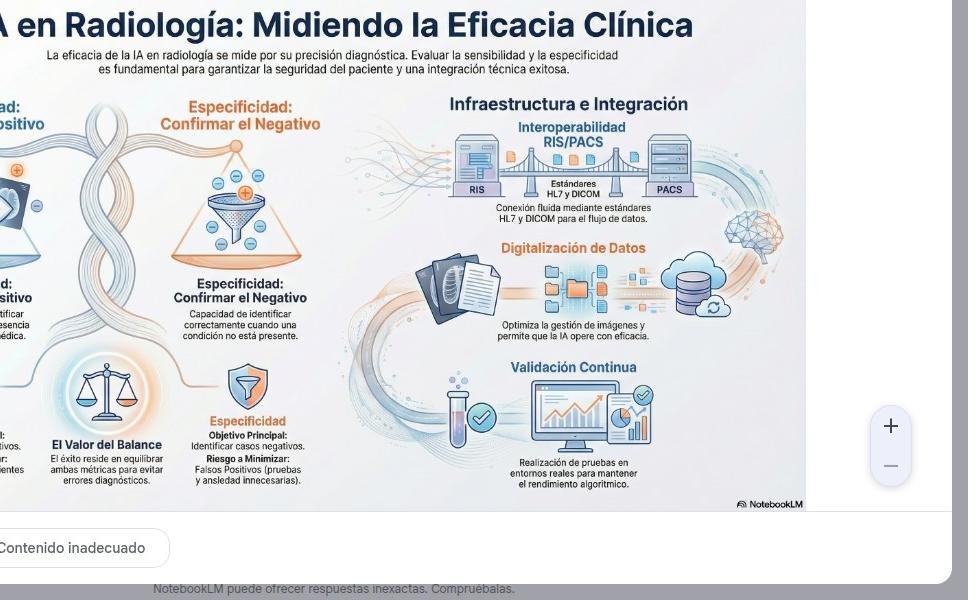
Understanding the Key Metrics: Sensitivity and Specificity
Simply knowing that an AI solution “works” is not enough for clinical adoption.
Healthcare organizations must quantify diagnostic performance using objective metrics that accurately reflect how the system behaves in real-world practice.
What Is Sensitivity?
Sensitivity measures an AI system’s ability to correctly identify positive cases.
In radiology, this means detecting a disease or abnormality when it is truly present in the medical image.
High sensitivity is essential because it minimizes false negatives, reducing the likelihood that clinically significant findings will be missed and ensuring patients receive timely diagnosis and treatment.
What Is Specificity?
Specificity measures the ability to correctly identify negative cases.
In other words, it reflects how accurately an AI system recognizes when no disease is present.
High specificity reduces false positives, preventing unnecessary imaging studies, invasive procedures, patient anxiety, and additional healthcare costs.
The true value of any AI solution lies in achieving the appropriate balance between sensitivity and specificity, providing radiologists with reliable decision support instead of creating additional diagnostic uncertainty.
The Technical Foundation of Reliable AI Performance
Achieving high sensitivity and specificity depends on much more than sophisticated AI algorithms.
Reliable clinical performance requires robust healthcare IT infrastructure and seamless integration with existing imaging systems.
Integration as the Foundation for Performance
AI solutions must communicate efficiently with Radiology Information Systems (RIS) and Picture Archiving and Communication Systems (PACS).
Soft in Health leverages extensive expertise in healthcare interoperability standards such as HL7 and DICOM to ensure seamless integration between AI platforms and existing clinical workflows.
Effective interoperability enables imaging data to flow efficiently across systems, allowing AI algorithms to analyze studies within the proper clinical context and deliver actionable results directly to radiologists.
Validation Strategies and the Importance of Digitalization
Maintaining diagnostic accuracy requires continuous validation.
Soft in Health employs comprehensive validation methodologies that include advanced algorithms, simulated testing environments, and ongoing clinical performance evaluations to ensure AI systems maintain consistent accuracy across diverse imaging scenarios.
Healthcare digitalization also plays a critical role.
By streamlining the management and processing of large imaging datasets, digital workflows enable greater automation, improved operational efficiency, and the ideal environment for AI technologies to perform at their highest potential.
Conclusion: Building an Informed AI Implementation Strategy
Evaluating sensitivity and specificity is only one component of successfully implementing AI in radiology.
Healthcare organizations must also ensure that AI solutions integrate effectively into existing clinical workflows, maintain interoperability with enterprise imaging systems, and deliver measurable improvements in patient care.
With extensive expertise in RIS, PACS, healthcare interoperability, cloud technologies, and imaging infrastructure, Soft in Health helps organizations deploy AI solutions that are both clinically effective and operationally scalable.
Platforms such as NEXtris demonstrate how a strong technological foundation enables AI to become an integral part of modern radiology departments.
Key Takeaways
- Sensitivity and Specificity Matter: These two metrics are fundamental for evaluating the clinical reliability of AI-based imaging solutions.
- Infrastructure Is Critical: AI performance depends heavily on seamless integration with RIS and PACS using healthcare standards such as HL7 and DICOM.
- Cross-Functional Collaboration Is Essential: Successful AI implementation requires close cooperation between radiologists, clinicians, and healthcare IT teams.
- Technology Decisions Should Be Comprehensive: Organizations should evaluate not only algorithm performance but also interoperability, scalability, and workflow integration.
For additional guidance on implementing AI in medical imaging, healthcare organizations are encouraged to consult best practices published by professional organizations such as the Radiological Society of North America (RSNA) and HIMSS.