How to Optimize Radiology Workflow
Optimize your B2B strategy with advanced technical SEO techniques. Learn how to improve CTR and authority in search engines.
Efficient Radiology: Key Strategies for Optimizing Workflow with Integrated Technology
In today’s fast-paced healthcare environment, efficiency is no longer optional—it’s essential. For radiology departments, where speed and diagnostic accuracy directly affect patient outcomes, optimizing workflow is a critical priority. A well-designed workflow not only improves the quality of patient care but also increases staff productivity and significantly reduces operational costs. The key is transforming traditional processes into streamlined, automated workflows supported by modern healthcare technology.
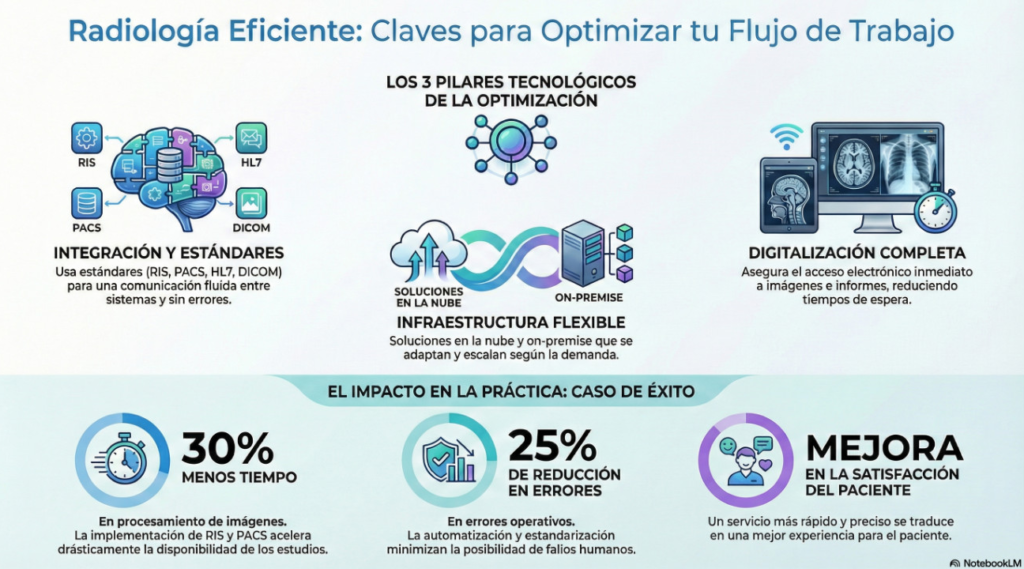
The Pillars of Radiology Workflow Optimization
Successfully managing the growing volume of medical imaging data requires focusing on three fundamental technological areas: standards-based interoperability, flexible infrastructure, and complete digital transformation.
Integration and Standardization: A Common Language for Healthcare Systems
Interoperability remains one of the greatest challenges in healthcare IT. For a radiology ecosystem to operate efficiently, every component must communicate using standardized protocols.
Solutions such as NEXtris leverage technologies including Radiology Information Systems (RIS), Picture Archiving and Communication Systems (PACS), HL7 messaging, and DICOM imaging standards. These industry standards enable seamless communication between platforms, reducing manual errors, eliminating redundant tasks, and creating a unified clinical workflow.
Flexible Infrastructure: On-Premises and Cloud Solutions
The infrastructure supporting radiology operations must be both reliable and scalable. Soft in Health provides deployment options for both on-premises environments and cloud-based infrastructures through strategic partnerships with leading providers such as AWS and Huawei Cloud.
This flexibility enables radiology departments to scale their operations according to demand while improving data accessibility and supporting real-time collaboration between healthcare professionals regardless of their physical location.
Digitalization as the Foundation of Efficiency
Modern radiology workflows depend on immediate access to clinical information. Digitalization ensures that imaging studies, reports, and patient information are available electronically throughout the healthcare organization.
This transformation significantly reduces diagnostic turnaround times, improves operational efficiency, strengthens data security, and enables authorized personnel to access critical information whenever it is needed.
Practical Application: Turning Strategy into Results
Implementing these technological principles produces measurable improvements across radiology operations. Real-world experience consistently demonstrates that a well-executed digital transformation strategy leads to significant gains in efficiency and service quality.
Example: Radiology Workflow Modernization
One healthcare organization implemented Soft in Health’s RIS and PACS solutions while integrating them with its existing infrastructure. Following deployment, the organization achieved measurable improvements, including:
- 30% reduction in medical image processing time.
- 25% decrease in operational errors.
- Significant improvements in overall patient satisfaction.
These results demonstrate how integrated healthcare technologies can directly improve both clinical and operational performance.
Conclusion: Strategic Decisions for a More Efficient Future
Optimizing radiology workflow is a strategic investment that directly influences healthcare quality, operational efficiency, and the long-term sustainability of medical organizations. Selecting the right technology should be based on its ability to integrate seamlessly, adapt to organizational growth, and support future innovation.
Key Considerations for Decision Makers
- Standards-Based Integration: Prioritize solutions that support HL7 and DICOM to ensure interoperability and prepare the organization for future technological advancements.
- Flexible Infrastructure: Consider scalable deployment models, including cloud platforms such as AWS and Huawei Cloud, to support growth and enable remote collaboration.
- Digital Transformation: Implement comprehensive digital workflows to improve efficiency, strengthen data security, and accelerate diagnostic processes.
Investing in a solution such as NEXtris from Soft in Health not only improves current radiology operations but also establishes a resilient technology ecosystem capable of supporting future healthcare challenges. The right technology decisions made today create a safer, more efficient, and more patient-centered radiology department for years to come.